

Health care costs are shaping how people think about November’s midterm elections. For many families, this is not about politics or campaign promises. It is about how much health care costs right now and whether they can afford care when they need it.
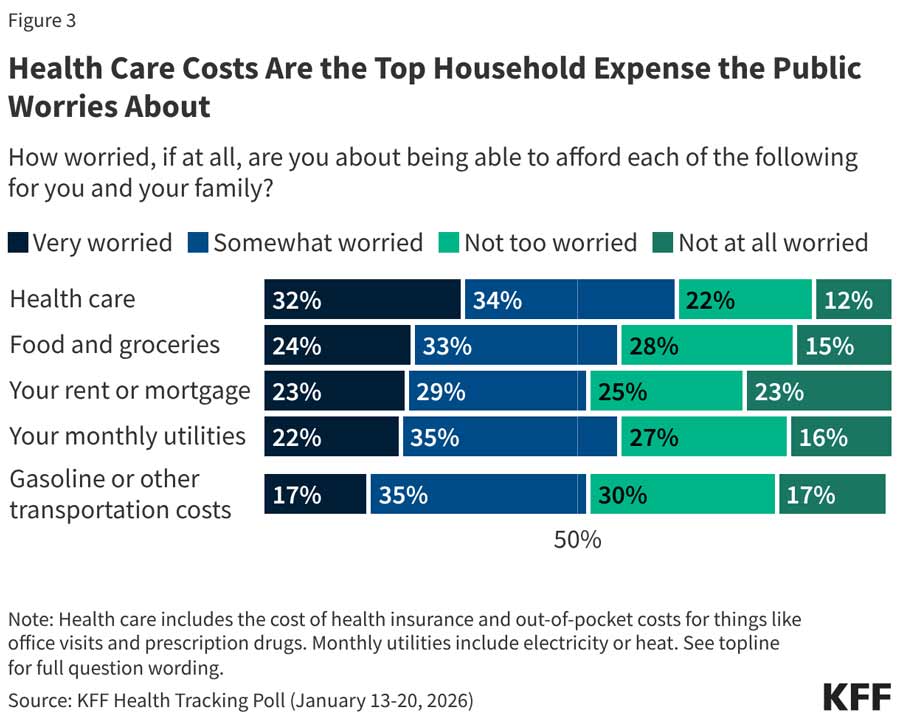
A recent poll from KFF shows that health care costs are one of the top concerns for voters nationwide. Two in three adults surveyed say they are worried about paying for their own or their families’ health care, a higher percentage than those who are concerned about money for food, housing, or utilities.
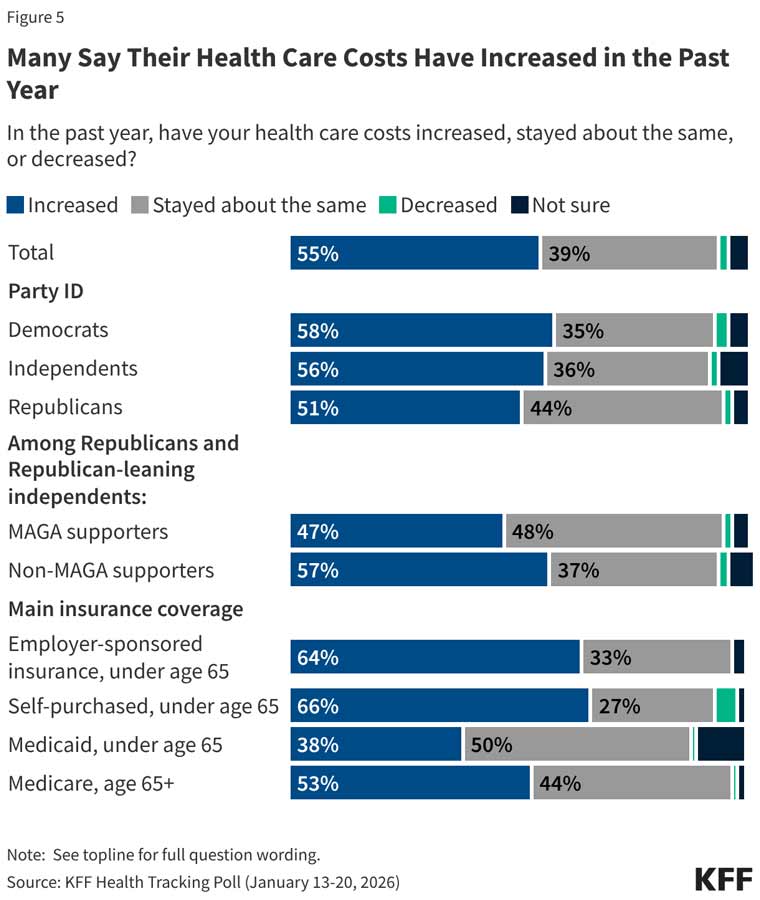
Americans polled by KFF don’t expect their health care costs to drop any time soon. In fact, more than half of those surveyed expect health costs to keep going up.
These worries impact quality of life, as people are forced to choose between affording their medical care, prescriptions, and other essential needs such as food, clothing, and shelter.
Health Care Is Costing More in 2026
People can now anticipate what their fixed and potential health care expenses will look like in 2026, and for many, those costs will be much higher than in the past.
Most people get health insurance through a job, while others get coverage through public programs like Medicare or Medicaid, or buy it on their own through the Marketplace (known in Kentucky as kynect). No matter how people are covered, many will face higher costs. Premiums have increased, and out-of-pocket costs like deductibles and co-insurance remain high. Medicaid patients will soon have co-pays intended to discourage utilization of care. The greater the cost, the greater the barriers to care.
Of note, average benchmark premiums on kynect have increased by 34%, from $442 in 2025 to $590 in 2026. When health insurance becomes harder to afford, people look for ways to cut back. Some switch plans. Others delay care, skip medications, or drop their coverage altogether.
Having Coverage Does Not Mean Care Is Affordable
Even when people have health insurance, care is often still too expensive. Research from The Commonwealth Fund shows that affordability remains a major problem in the U.S. health care system.
The Fund’s 2025 Scorecard on State Health System Performance found that, even in states with high coverage rates, many people struggle to afford health care costs. High deductibles, copays, and prescription drug costs lead many insured adults to delay care or skip medications.
People in the United States are more likely to face cost barriers to care than people in other high-income countries. A primary reason is that these other countries guarantee that everyone is covered, which the U.S. does not.
What Kentuckians Are Experiencing
The KFF polling results referenced above reflect what The Asclepius Initiative hears directly from Kentuckians.
In TAI’s 2024 survey of 1,001 adult Kentuckians, more than half of insured adults said they delayed, skipped, or avoided medical care or medications because of cost. This included people across a range of coverage types.
Our 2025 study, which included interviews with adults across the Commonwealth, showed the same pattern. People shared that the system seems complex by design, does not prioritize, and in fact, restricts access to patient care, and that high out-of-pocket costs affect their care-seeking and compliance decisions.
These experiences affect how people think about their well-being and the future.
Why the 2026 Midterms Matter
The 2026 midterm elections matter because decisions made at the federal level affect whether health care becomes more affordable or more out of reach. Right now, many people are paying higher costs and see few options for relief.
Congress has failed to address consumers’ rising health care costs. The House passed a bill in January to extend the enhanced premium tax credits for three years. However, the legislation is still pending in the Senate, which rejected a similar bill before the end of 2025. As a result, families are left to manage higher premiums and out-of-pocket expenses on their own.
The findings from KFF, The Commonwealth Fund, and The Asclepius Initiative point to the same reality: health care costs are not a future concern. They are a present-day issue that affects health, finances, and quality of life.
At The Asclepius Initiative, we believe education matters. When people understand how health care coverage works and why costs keep rising, they are better prepared to take part in conversations about the subject. As voters think about what is at stake in the years ahead, clear and honest information is essential.
Kentucky’s primary election is May 19th. The deadline to register to vote is April 20th.
The general election is November 3rd. The deadline to register to vote is October 5th.
Click here for more information.