

In the United States, a job often has important benefits beyond a paycheck. For millions of workers, it is also how they get health care coverage. That can make leaving a job much more complicated.
New polling from the West Health-Gallup Center on Healthcare in America found that nearly one in four U.S. workers, or 23 million adults, with employer-sponsored health insurance are staying in jobs they would rather leave because they are afraid of losing their coverage. That number is up 8% since Gallup asked the same question in 2021.
This problem is often called “job lock.” It happens when a person’s need for health care coverage limits their ability to change jobs, start a business, retire, go back to school, or make other major life decisions.
One in Four Workers Say Health Insurance Keeps Them in a Job
Gallup found that job lock is even more common among people who are already struggling with health care costs.
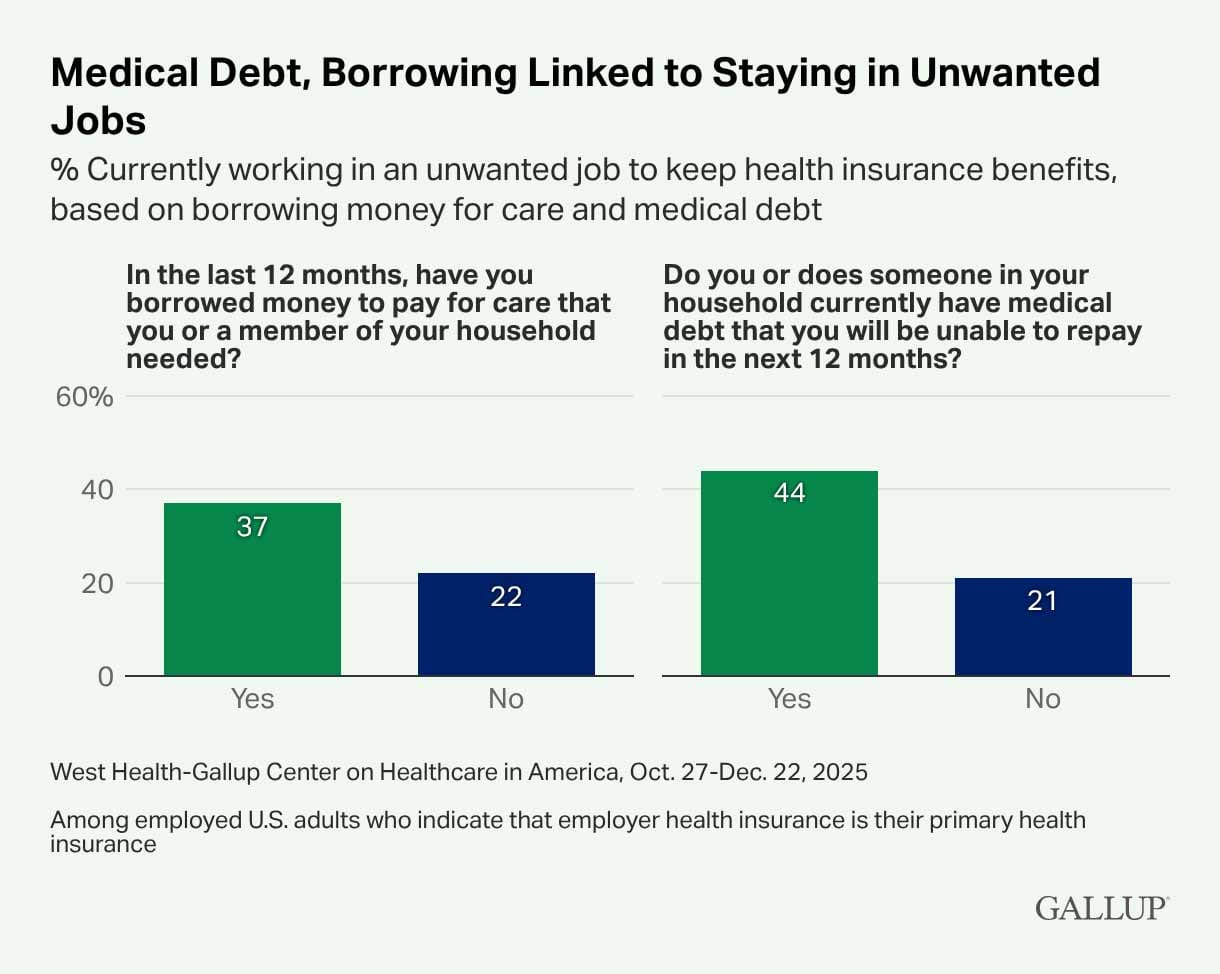
More than half of workers who reported a lot of stress because of health care costs said they were staying in their jobs for the insurance. This was also true for nearly half of workers who said health care costs are a major financial burden. Among workers with medical debt, 44% said they were staying in an unwanted job to keep their insurance, compared with 21% of workers without medical debt.
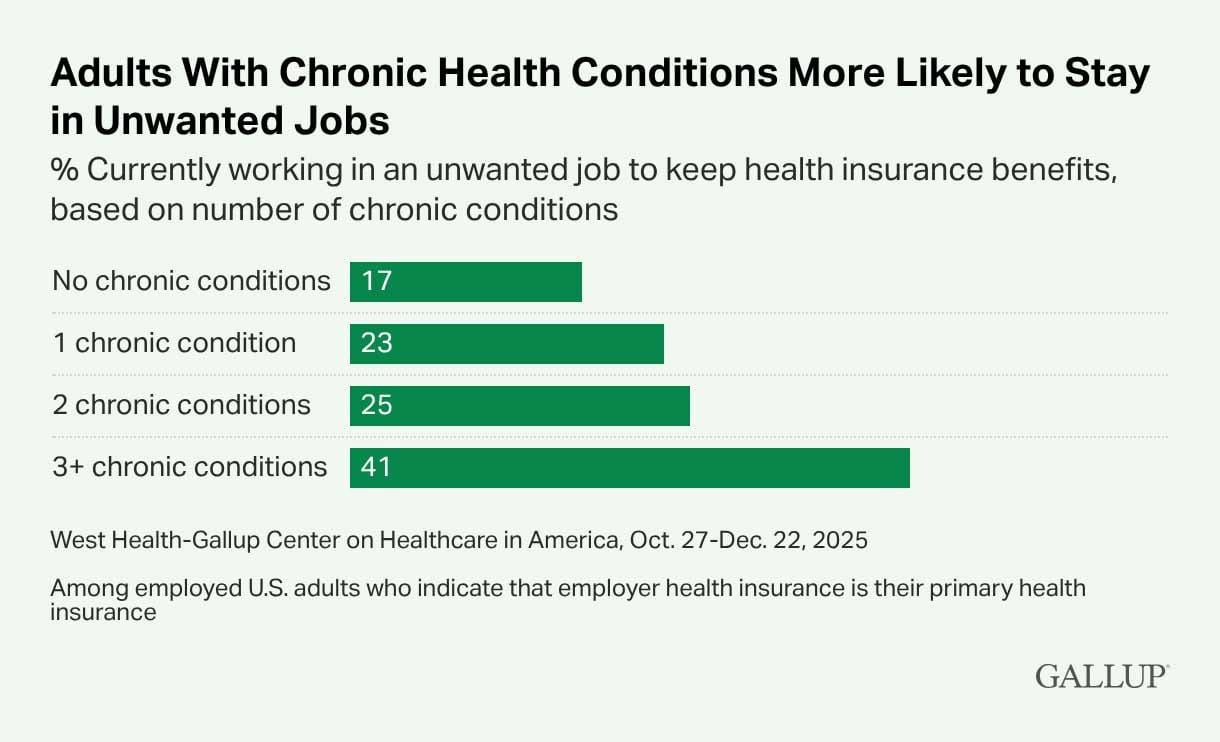
Not surprisingly, workers with ongoing health problems may have even less flexibility. Those with chronic conditions were nearly twice as likely to say they stayed in a job for health insurance as those without chronic conditions (29% compared to 17%). The number jumped to 41% among people with three or more diagnosed conditions.
For someone who needs regular medications, specialist visits, treatments, or other continued care, leaving a job can mean much more than a loss or change in income. It may also mean learning the rules of a new insurance plan, changing doctors, hospitals, and pharmacies, or losing access to care altogether.
How Health Insurance Became Tied to Jobs
The strong connection between jobs and health insurance developed over time. Employer-sponsored coverage grew quickly during World War II, when wage controls limited how much employers could increase workers’ pay. Health benefits became another way for employers to attract workers. Later tax policies made job-based health insurance even more attractive, until it became the main source of private coverage for working-age Americans and their families.
What began as a way to offer workers additional compensation now affects job choice and lifestyle flexibility.
Job-Based Coverage Can Make Life Changes More Complicated
Employer-sponsored insurance is the most common source of health care coverage in the U.S. But because this type of insurance depends on having a job, it is naturally less stable. This makes health care coverage less secure and less affordable for many people.
For working-age people who do not have insurance through their work, other options may be available. Depending on the situation, it may be possible to obtain coverage through the Marketplace, Medicaid, a spouse or partner’s plan, or temporary continuation of a job-based plan through COBRA.
The Asclepius Initiative (TAI) provides free information about employer-sponsored coverage and coverage loss and transitions to help people prepare for and address changes to their health care coverage.
Knowledge can help people navigate the system we have today. But it does not remove the larger problem created when access to affordable health care depends heavily on having a particular kind of job benefit.
TAI works to help people navigate the health care coverage system we have today while building support for a more equitable system in the future. Universal coverage can mean that everyone has affordable, high-quality health care coverage from birth until death, regardless of where they work or what changes happen in their lives.
Health care coverage should support people as their lives change, not keep them from making those changes.