
The Affordable Care Act (ACA) was signed into law in 2010 to expand access to health care coverage, reduce costs, and set defined standards for commercial health care coverage benefits in the United States. It was designed to address long-standing problems in the U.S. health care system, where people could be charged more because of their health conditions, be left without access to basic services, or be denied coverage altogether.
The ACA did not replace the existing system. Instead, it built on what was already in place. It added new rules for private insurance, allowed the expansion of state Medicaid programs, and created a reliable path for people and small businesses to buy health insurance. Today, the ACA affects many parts of the health care system, including self-purchased coverage, employer-sponsored coverage, and public programs.
Why the Affordable Care Act Was Created
Prior to the ACA, health care coverage in the U.S. was often inadequate for those who were insured and unattainable for many others. Insurance companies could limit, delay, or deny coverage based on pre-existing conditions, exclude important services, or place limits on how much they would pay over time.
The ACA addressed these problems by expanding access to coverage, setting minimum standards for benefits, and introducing protections that apply across much of the health insurance market.
How the Affordable Care Act Changed Health Care Coverage
The ACA created a set of nationwide rules that reshaped certain key aspects of how health care coverage works. One of the most significant changes is that qualified health plans can no longer deny coverage or charge higher premiums based on a person’s health history (pre-existing conditions). This made coverage more obtainable and reduced the risk of being excluded from coverage due to past or present illness.
The law also eliminated lifetime and annual dollar limits on essential health benefits. Before the ACA, some plans would stop paying for care after a certain amount had been spent. Removing these limits provides stronger financial protection, especially for people with serious or ongoing health conditions.
In addition, the ACA made it easier to get preventive care by removing cost barriers. Many routine checkups, screening tests, procedures, and vaccines must now be covered without copays or deductibles when received from an in-network provider. This supports the avoidance or early detection of problems, resulting in better long-term health outcomes.
Another widely used provision allows young adults to stay on a parent’s health plan until age 26. This allows a more stable transition period for young people entering the workforce or continuing their education, reducing the likelihood of gaps in coverage during early adulthood.
The ACA also created the Health Insurance Marketplace, which provides a way for people to purchase individual or family health care coverage if they do not have access to affordable employer-sponsored coverage or do not qualify for public programs such as Medicaid or Medicare. Small businesses can also purchase health care coverage on the Marketplace through the Small Business Health Options Program (SHOP).
Under the ACA, states were given the option to create and operate their own Marketplace or use the federal Marketplace through Healthcare.gov. As a result, some states, including Kentucky, operate their own Marketplace, while others rely on the federal platform. Kentucky’s Marketplace is known as kynect. Marketplace plans must meet ACA standards for coverage, and many people qualify for financial assistance to help lower monthly premiums and out-of-pocket costs. The Marketplace is an important avenue for health care coverage for people and businesses that may not have other affordable options available.
Together, these changes contributed to a significant increase in the number of people with health care coverage. After the ACA was implemented, the uninsured rate in the United States fell to historic lows, including in places like Kentucky that expanded Medicaid. More people were eligible for public programs or able to purchase plans on their own through the Marketplace. While coverage levels have shifted over time, the ACA remains a key reason why more people have health care coverage today than before the law was passed.
The 10 Essential Health Benefits
A central feature of the ACA is the requirement that most individual and group commercial health plans cover a core set of services known as the 10 essential health benefits. Before this requirement, covered benefits could vary widely, and some plans excluded important services such as prenatal care, mental health treatment, or prescription drugs. This made it difficult for people to obtain necessary care and medications.
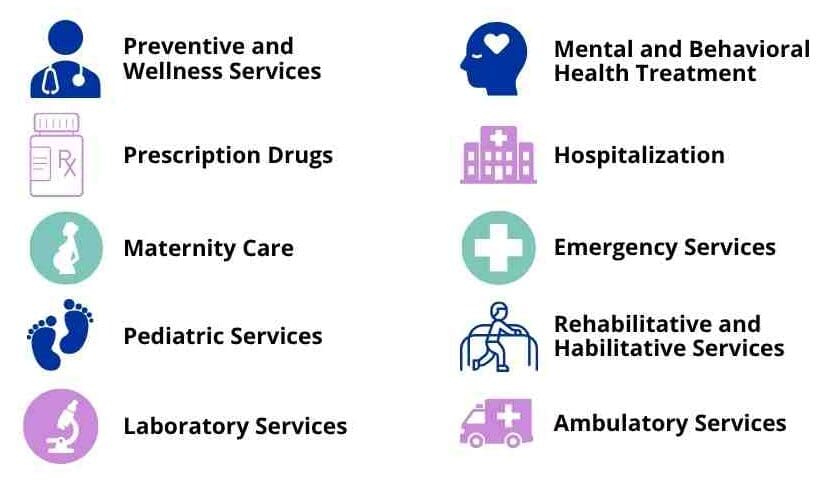
Together, these defined benefits have helped more people get preventive care and other needed health care services. However, new federal rules will make catastrophic plans more widely available. Catastrophic plans usually have lower monthly premiums, but they cover very little until a person reaches the yearly deductible, which, for these plans, is the same as the out-of-pocket maximum. In 2026, the limit is $10,600 for an individual or $21,200 for a family. In 2027, the limits for Bronze plans will be even higher: $15,600 for one person and $31,200 for a family. While catastrophic plans may cost less each month in premiums, the high out-of-pocket costs could keep people from getting care when they need it.
How the Affordable Care Act Affects Employer-Sponsored Coverage
Although the ACA is often associated with coverage purchased through the Marketplace, it also made important changes to employer-sponsored insurance, which remains the most common source of health care coverage in the United States.
The law introduced employer responsibility requirements for larger employers, generally those with 50 or more full-time employees. These employers are expected to offer health care coverage that meets minimum standards for affordability and value. If they do not, they may face financial penalties.
Employer-sponsored plans must also follow many of the consumer protections established by the ACA. These include covering preventive services without cost-sharing, allowing dependents to remain on a plan until age 26, and removing lifetime and annual limits on essential health benefits. These changes made employer-based coverage more effective for employees and their families, while aligning it more closely with broader federal standards.
At the same time, employer plans are held to different standards than individual and Marketplace plans. They are not required to cover all 10 essential health benefits in the same way, but they must still meet federal requirements designed to ensure that coverage provides meaningful financial protection.
Medicaid Expansion Under the Affordable Care Act
The ACA expanded access to Medicaid by allowing states to cover more low-income adults. In total, 40 states and Washington, D.C., have chosen to expand access to Medicaid under the law.
In these states, eligibility was extended to non-pregnant adults with incomes up to 138% of the federal poverty level. This made it possible for millions of people to gain health care coverage, particularly those who previously did not qualify for Medicaid but could not afford private insurance.
Kentucky is a Medicaid expansion state, which has played a significant role in increasing access to coverage in the Commonwealth. As a result, more adults have been able to enroll in Medicaid and access care that would have otherwise been out of reach.
Since successful legal challenges to the ACA have made Medicaid expansion optional, access to coverage for many people depends on the state in which they live. In states that have not expanded Medicaid, many low-income adults fall into an eligibility gap: they neither qualify for Medicaid nor meet guidelines for financial assistance for Marketplace coverage.
The Individual Mandate
The original ACA law included a provision that required most US citizens and legal residents to have insurance coverage. This requirement was intended to decrease the number of uninsured and lower overall costs by including both healthy and sick individuals in the insurance pool.
As written, the ACA imposed a financial penalty for those who did not have coverage. However, this penalty was reduced to zero beginning in 2019. While the requirement remains part of the law, it is no longer enforced.
How the Affordable Care Act Shapes Health Care Coverage Today
The Affordable Care Act continues to play a central role in how health care coverage operates in the United States. It established a set of baseline protections and standards that apply to many insurance plans, while also expanding access through programs like Medicaid and the Marketplace.
At the same time, the system is hard to use. Both health care coverage and health care remain very expensive. People can easily lose coverage, and not everyone is guaranteed access to it. Someone may receive health insurance through an employer, purchase a plan on their own, or qualify for a public program, each with its own rules, regulations, costs, and enrollment steps. Even with the ACA’s protections, coverage does not always mean that care is accessible, equitable, affordable, or consistent.