

Should everyone have health care coverage, regardless of where they work or how much money they earn? And what would people want from a system designed to cover everyone?
The Asclepius Initiative’s (TAI) 2026 Kentucky Health Care Coverage Survey asked adults across the state about these questions. The results show broad support for a national health care coverage program, along with concerns about cost, choice, and quality.
Many Kentuckians already struggle to afford and use medical care, even when they have insurance. Their responses to questions considering a different type of health care financing system offer insights into what they want to change.
Most Kentuckians Believe Health Care Is a Right
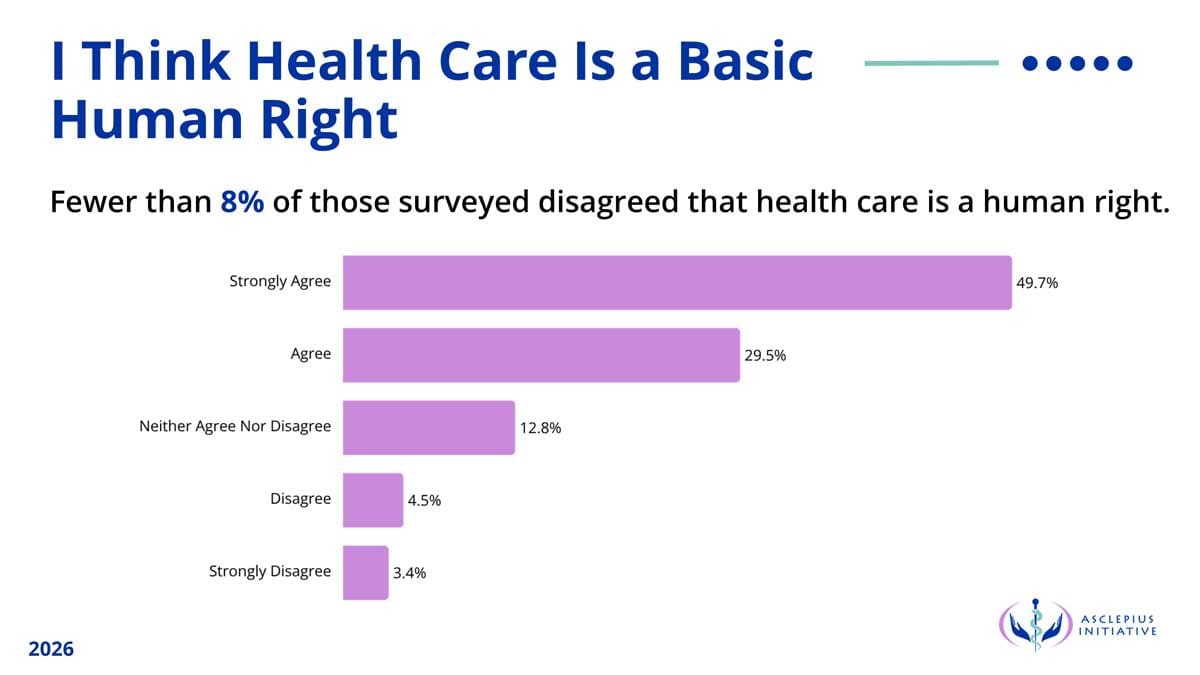
Nearly eight in ten participants (79.2%) agreed that health care is a basic human right. Only 7.9% disagreed.
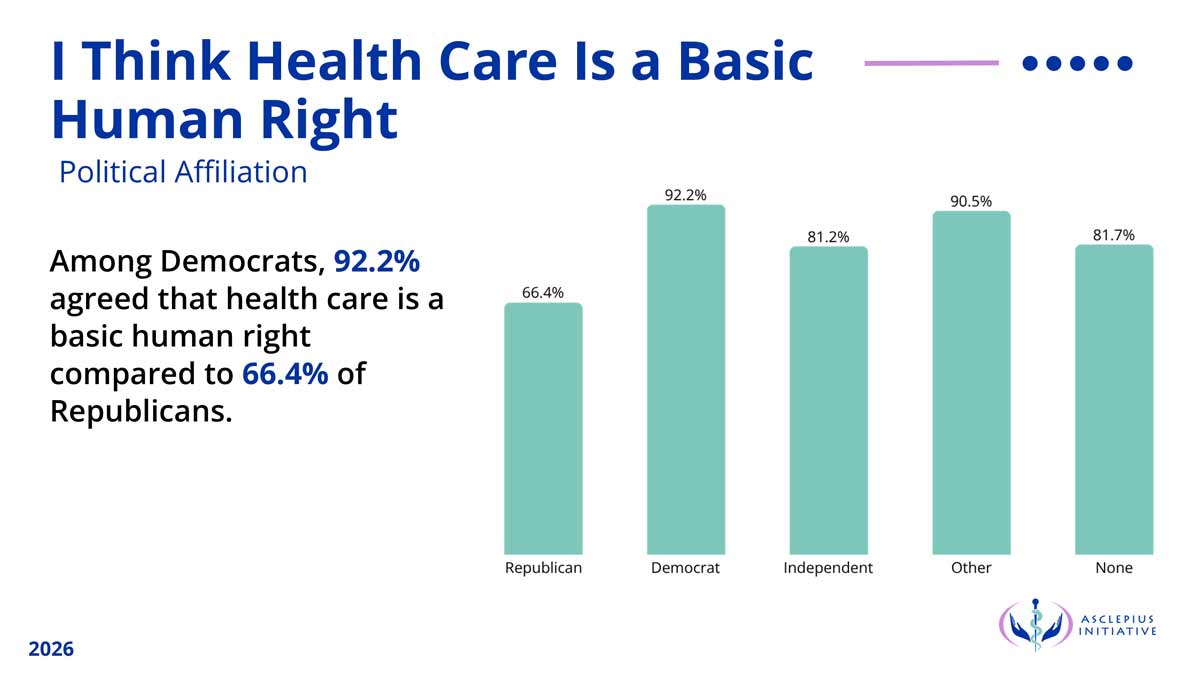
The belief that health care is a human right crossed political lines, though agreement levels differed. Among Democrats, 92.2% agreed that health care is a basic human right, compared with 81.2% of Independents and 66.4% of Republicans.
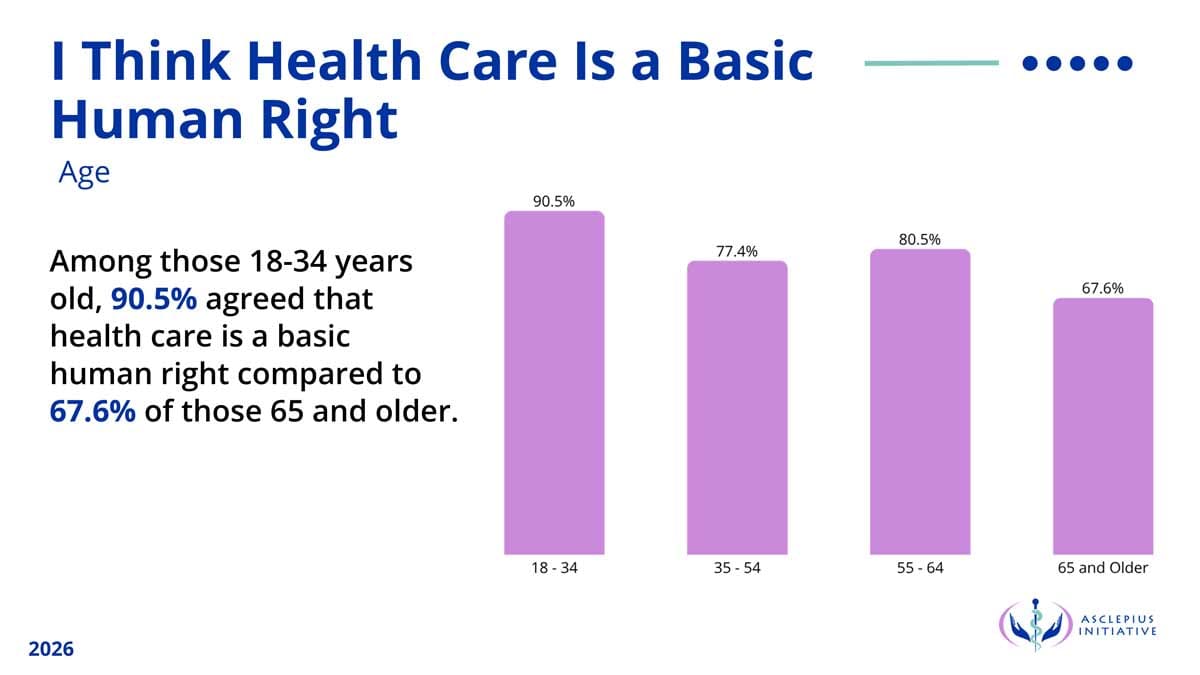
Age also made a difference. Among participants ages 18–34, 90.5% agreed, compared with 67.6% of those ages 65 and older.
Although only a small share of participants disagreed, those who did were more likely to be older, married, Republican, or have coverage through the Kentucky Employees Health Plan or VA.
Overall, the findings show a strong support for health care as a basic human right, even among groups with different political views, ages, and types of health care coverage.
More Than Seven in Ten Favor a National Coverage Program
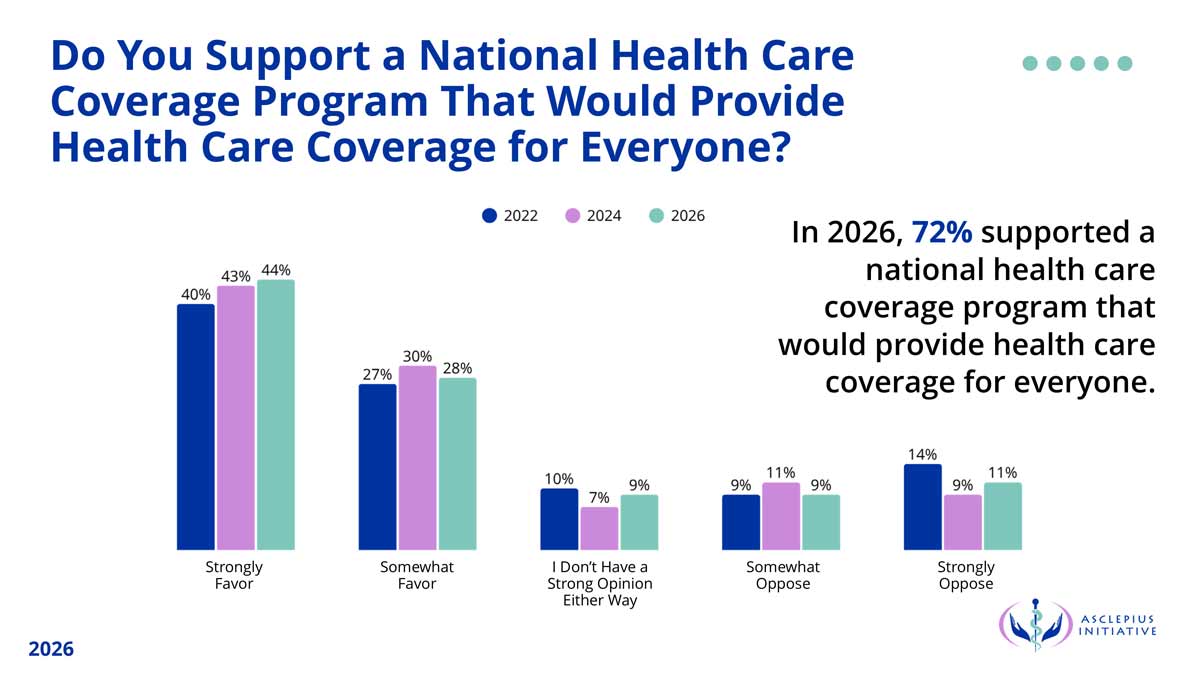
The survey found that 71.6% favored a national health care coverage program that would provide coverage for everyone. That included 43.9% who strongly favored it and 27.7% who somewhat favored it. Less than one in five (19%) opposed the idea.
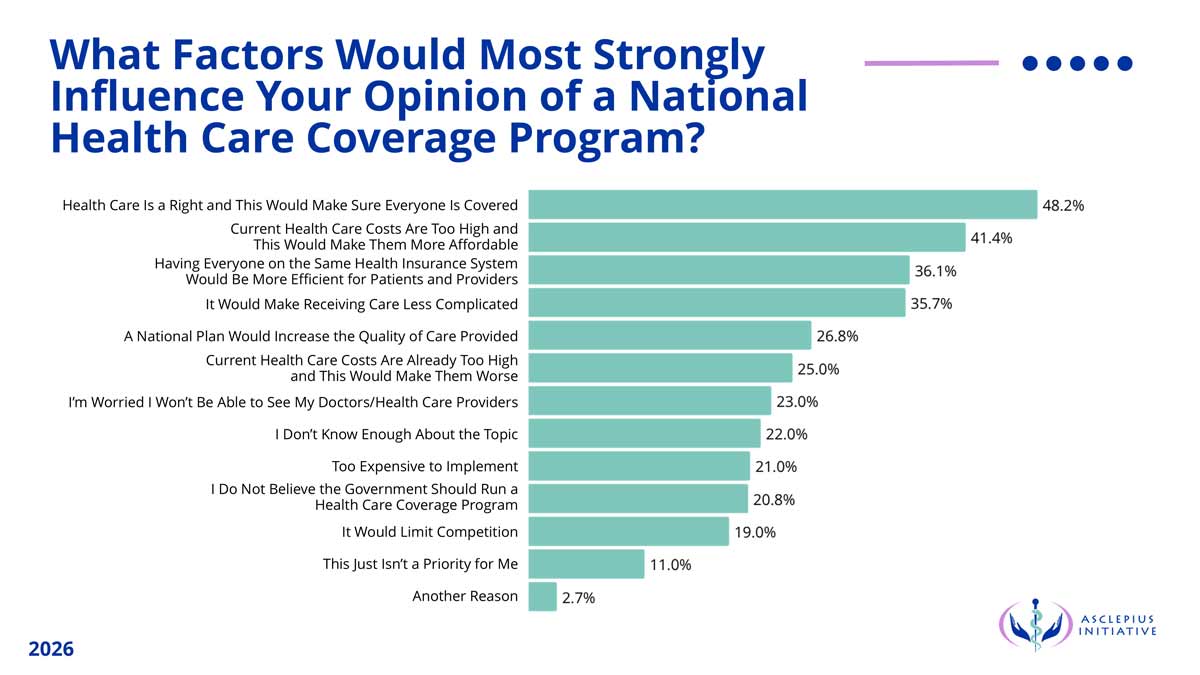
Participants were then asked which factors most influenced their opinion of a national program. For this question, participants could select up to five responses. The most frequently chosen answer, selected by 48.2%, was that health care is a right and the program would make sure everyone was covered.
Another 41.4% selected the possibility of making health care more affordable. More than one-third (36.1%) believed having everyone in the same insurance system would make things more efficient for patients and providers. A similar share (35.7%) selected making care less complicated.
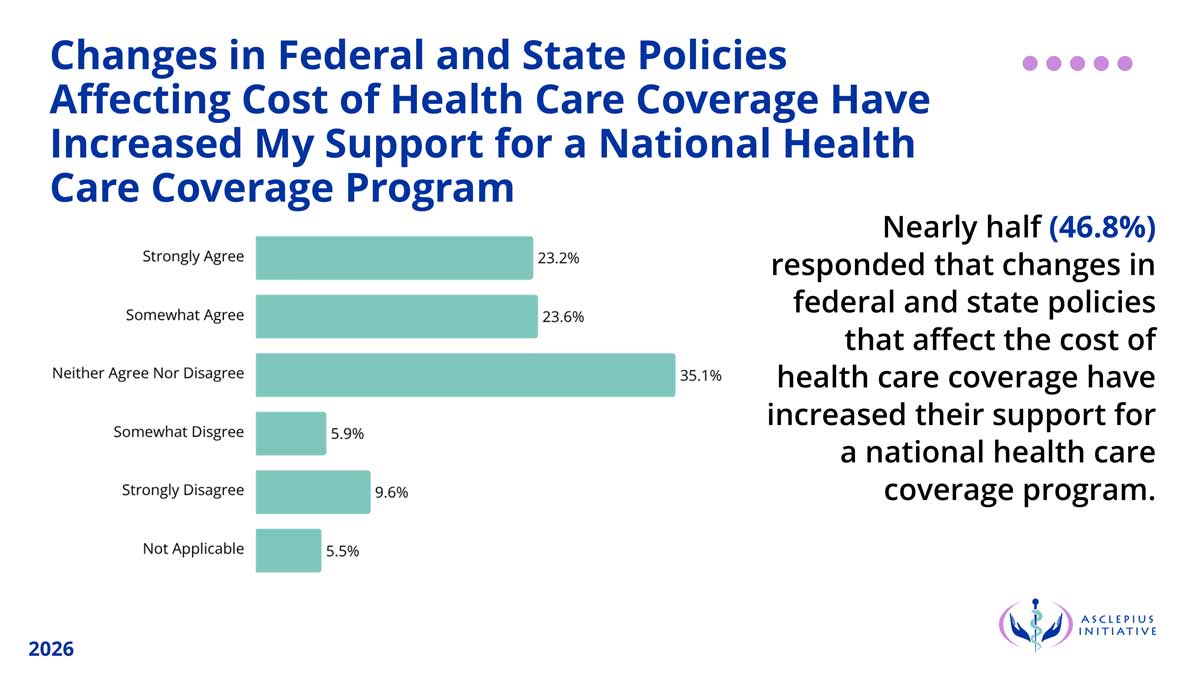
The survey asked about the effects of recent federal changes in health care policy, which are widely predicted to cause millions to lose Medicaid coverage and to make Marketplace coverage more expensive. Nearly half of participants (46.8%) said these changes had increased their support for a national health care coverage program.
Together, these findings show that affordability, reliable coverage, and concerns about the current system’s structure and function are key factors shaping Kentuckians’ views on providing health care coverage for everyone.
Coverage Should Stay With People as Their Lives Change
Many participants expressed an interest in separating health insurance from employment.
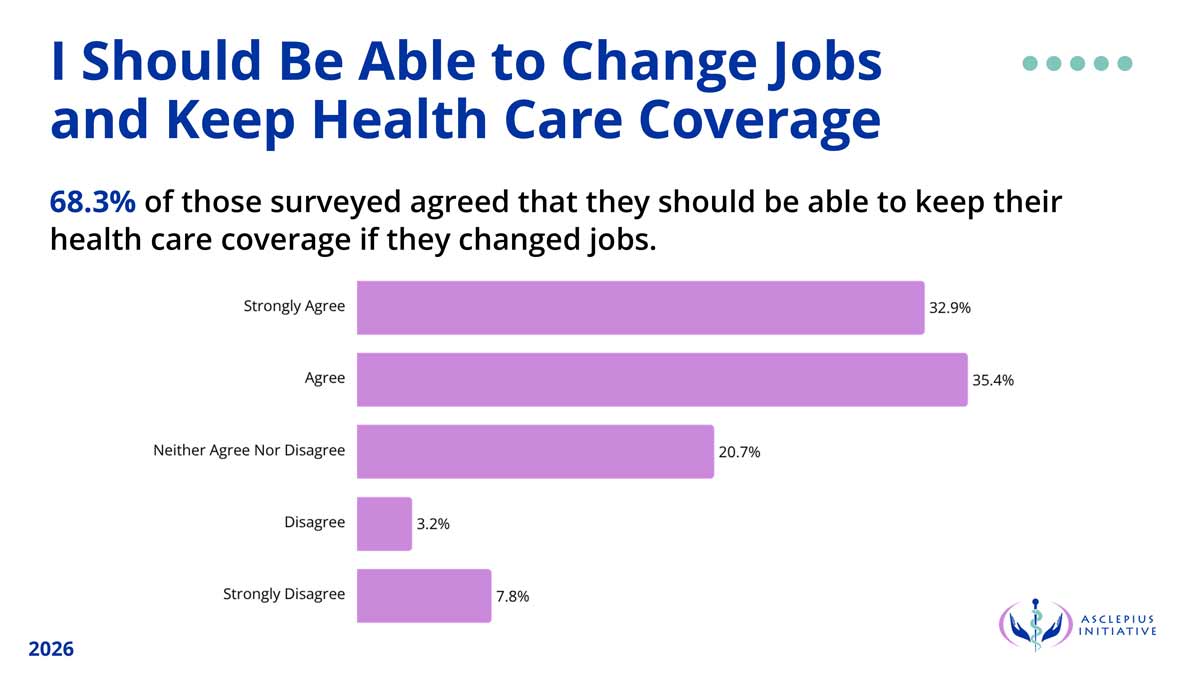
More than half (54.3%) agreed that health insurance should not be connected to a job, while only 17.2% disagreed. An even greater percentage (68.3%) believed people should be able to change jobs and keep their health care coverage.
The survey explored what participants would do if they no longer had to worry about health care coverage. While most (65.4%) said they would make no major life changes, compared with 53.2% in 2024 and 58.6% in 2022, others said they would change jobs or start a new career (15.2%), retire (11.1%), go back to school (7.7%), or leave their current domestic situation (3.7%).
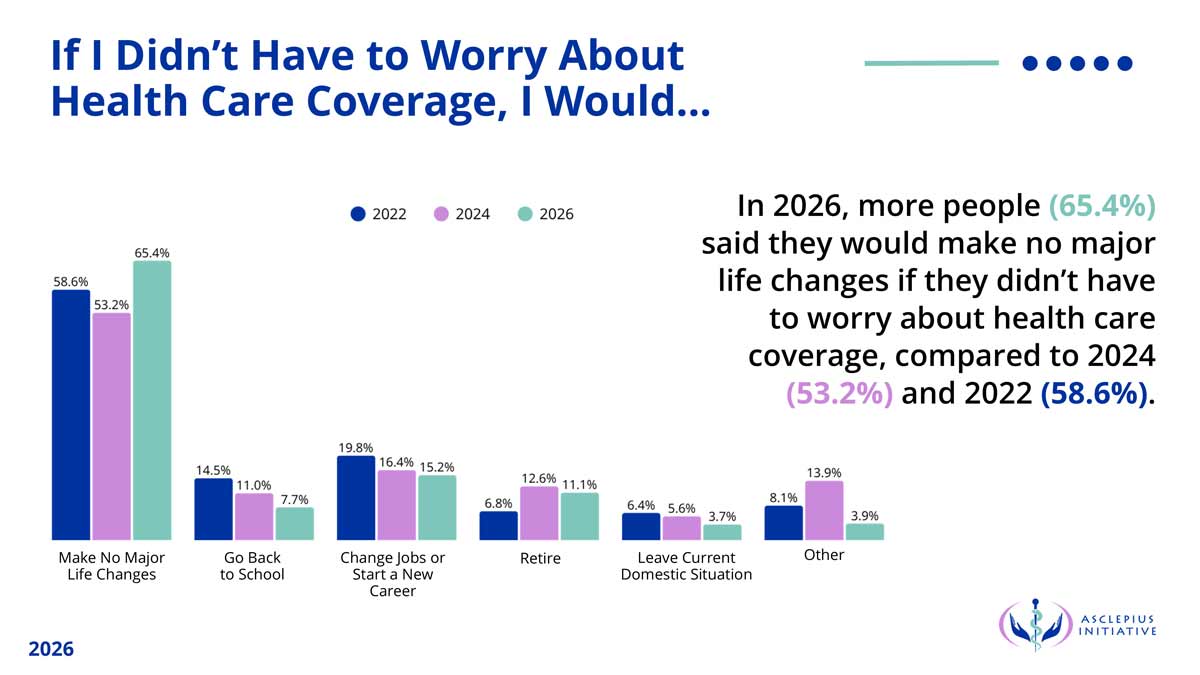
These findings show how the way the U.S. health care system works can shape major decisions about employment, education, retirement, and other important aspects of people’s lives.
When asked which feature of a national program would matter most, one participant wrote, “Reliable coverage no matter where someone works, or lives would probably matter most to me.”
What Should a Different System Include?
Participants expressed overwhelming agreement regarding services and protections that health care coverage should provide.
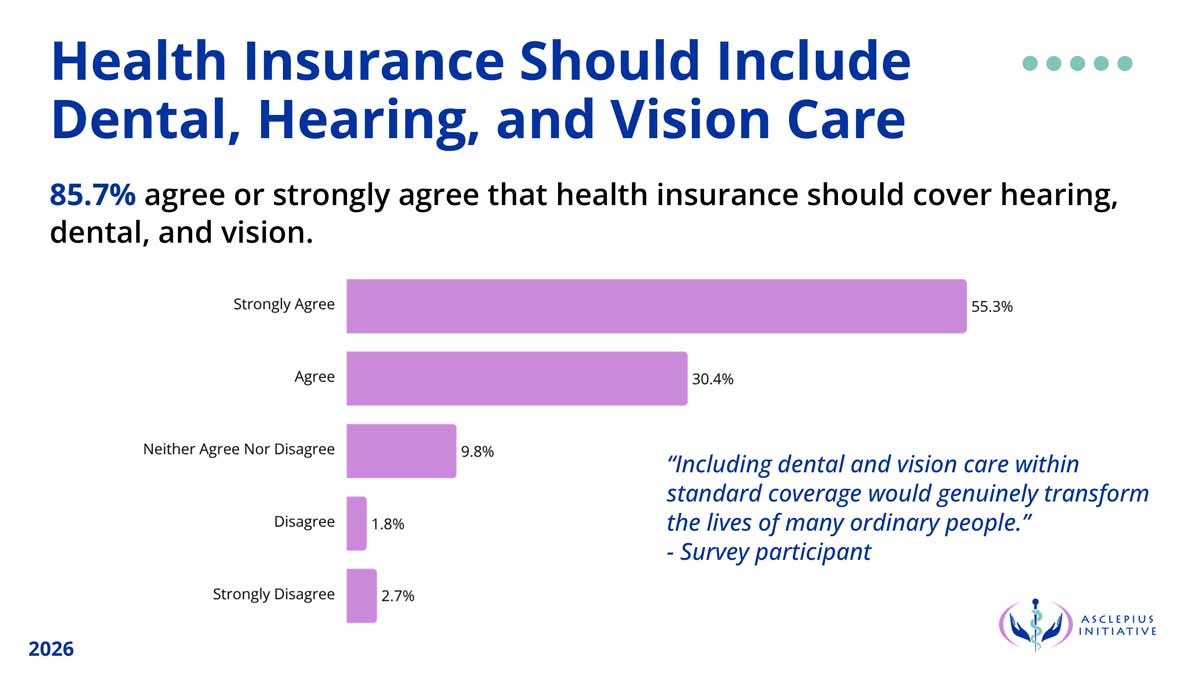
More than eight in ten (85.7%) agreed that insurance should cover dental, hearing, and vision care. Another 69.1% said they would support government-paid health care if the coverage were the same as or better than what they already had.
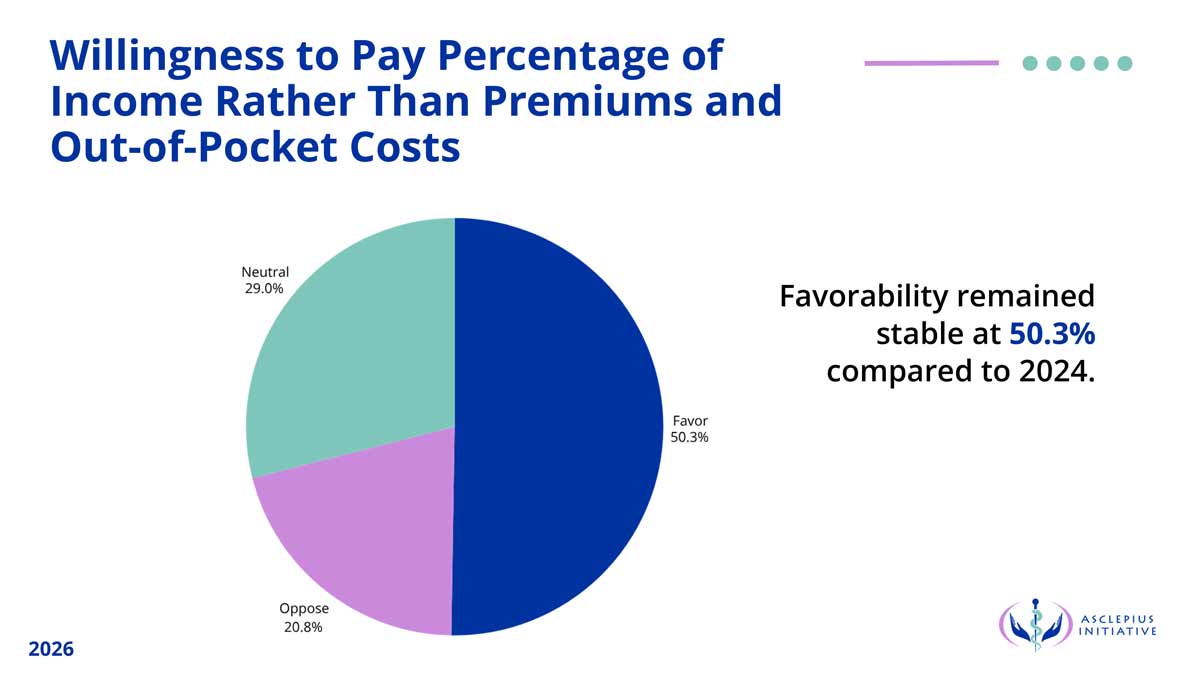
Participants also showed interest in changing how people pay for health care coverage. Just over half (50.3%) preferred paying a percentage of their income instead of premiums and out-of-pocket medical costs.
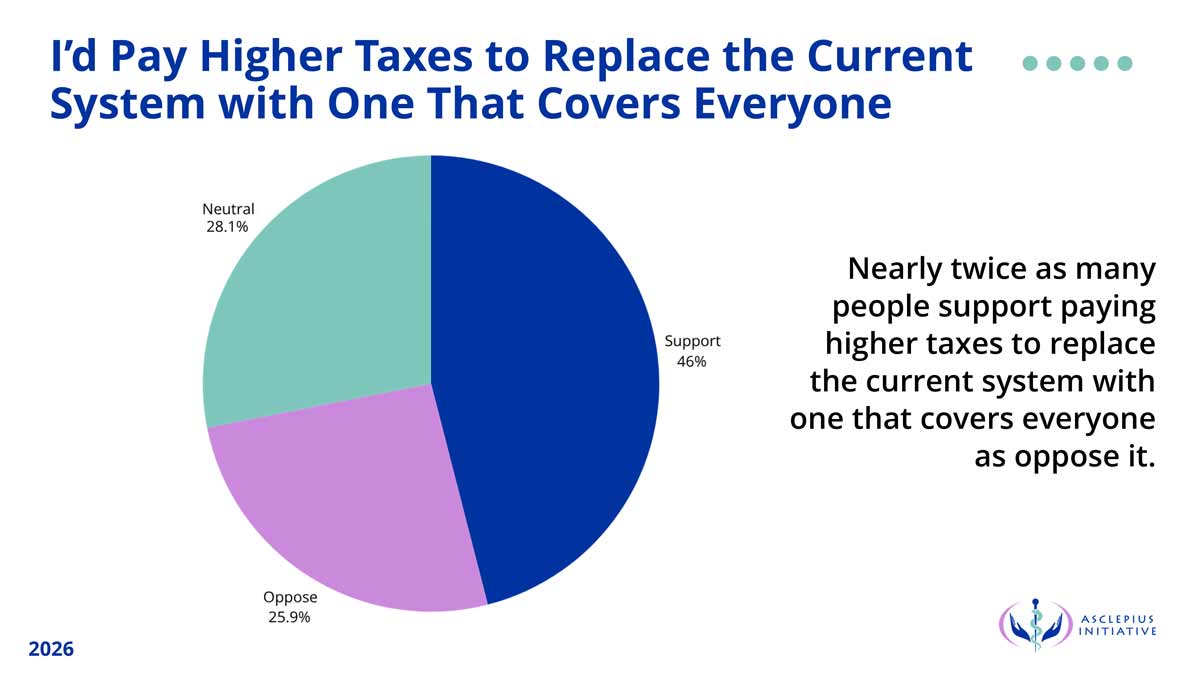
Similarly, 46.0% supported paying higher taxes to replace the current insurance system with one that covers everyone, compared with 25.9% who opposed it. These answers reflect support for ensuring coverage and making paying for care less complicated.
Concerns About Costs, Doctors, and Quality Remain
Not all participants favored a national program, and some were undecided. Their concerns are important for policymakers to take into consideration.
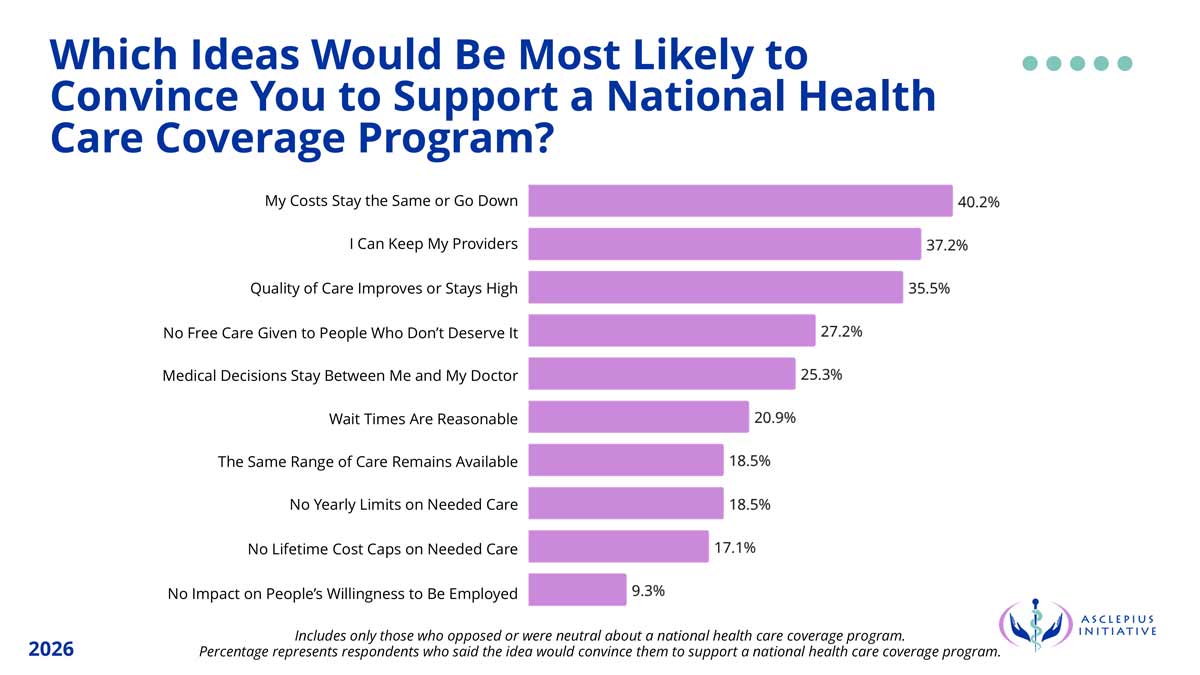
Among the 306 participants who opposed or were neutral about a national program (just over a quarter of the total), 40.2% said they could be convinced to support it if their costs stayed the same or went down. Another 37.2% wanted assurance that they could keep their health care providers, and 35.5% said quality would need to stay high or improve.
Of note, a recent study by researchers at Yale projected that a single-payer system would save $1 trillion and 114,000 lives per year.
These findings show the importance of having a thorough discussion about how a national program would work, addressing fears, and dispelling myths.
Building Support for a System That Meets People’s Needs
TAI’s survey shows that most participants believe health care is a basic human right and favor a program that would cover everyone. It also shows that people care deeply about the details: cost, reliable coverage, provider choice, and the quality of care.
No system is perfect, but with the highest per capita health care costs, the third-lowest life expectancy, the greatest burden of chronic disease, and the highest maternal and infant mortality rates of our high-income peer nations, the U.S. could do much better than it does currently.
TAI’s survey results offer a starting point for conversations about what an improved system should provide and how it could lead to better health outcomes, lower costs, and less stress for people who need care.