

Having health care coverage can make it easier and more affordable to get medical care. But finding a plan, particularly one that meets the needs of you and your family, understanding its rules, and paying for services can still be quite challenging.
The Asclepius Initiative’s (TAI) 2026 Kentucky Health Care Coverage Survey asked 1,080 adults across the Commonwealth about their attitudes, beliefs, and experiences with respect to health care coverage. The survey found that even many insured Kentuckians face barriers when it comes to choosing and using insurance.
A closer look at the results provides insights into these problems and why having a valid insurance card does not necessarily mean people can get the care they need.
Who Has Health Care Coverage in Kentucky?
Most survey participants (92.5%) reported having health care coverage. The remaining 7.5% were uninsured, up from 5% uninsured in TAI’s 2024 survey.
Private commercial insurance was the most common type of coverage, reported by 49.2% of participants. Medicaid was next at 22.7%, followed by Medicare Advantage (12.1%) and Traditional Medicare (9.6%).
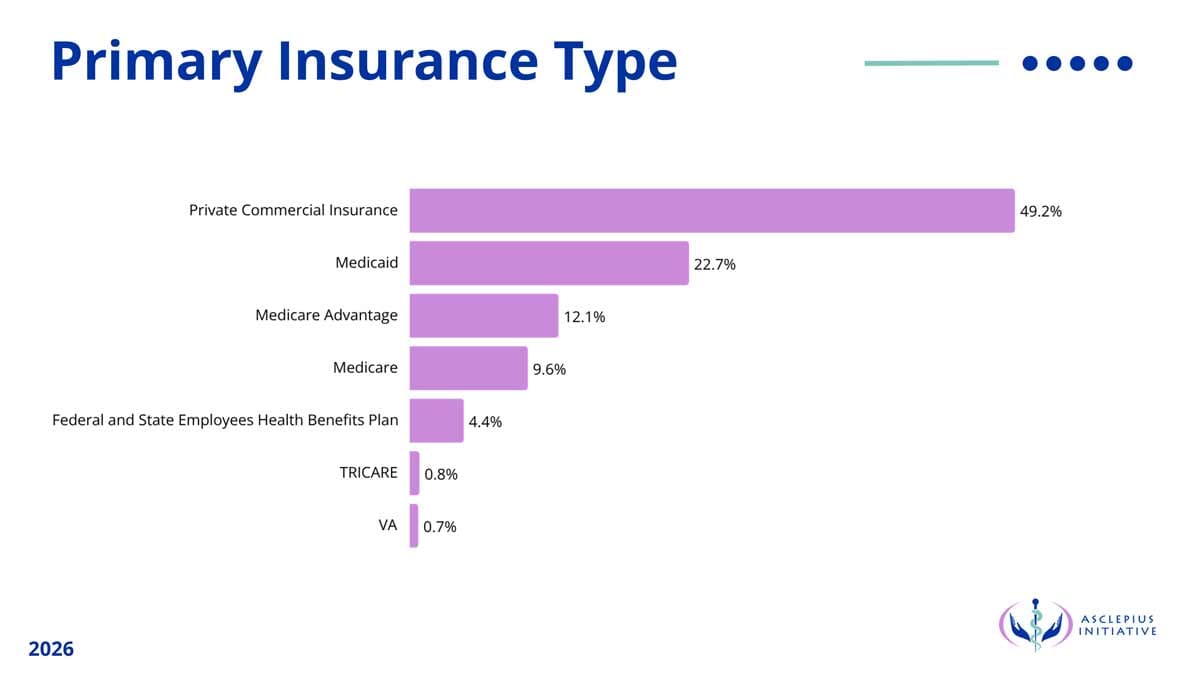
Where people live makes a difference. Among those who reside in rural areas, 30.6% had Medicaid as their primary coverage, compared with 17% of those who live in urban locations. This illustrates the greater role that Medicaid plays in providing health care coverage to those living in rural Kentucky.
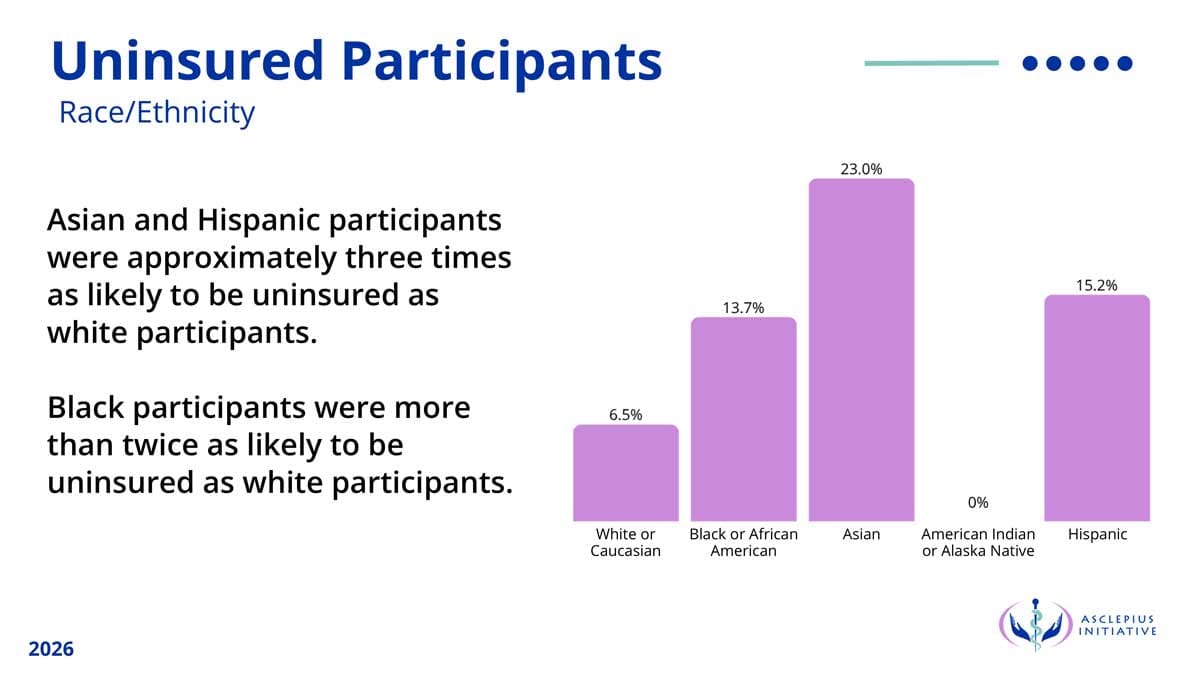
Uninsured rates also differed by race and ethnicity. Among Black participants, 13.7% were uninsured, compared with 6.5% of white participants and 15.2% of Hispanic participants.
Cost Is a Key Barrier to Coverage
When asked why they were uninsured, nearly half (44.9%) said the cost was too high. About one-quarter (24.1%) cited lack of employment as a reason for being uninsured, while 11.6% said their employer did not offer insurance.
Another 11% said they didn’t know where to start looking for coverage. A smaller share (3.7%) said insurance was confusing.
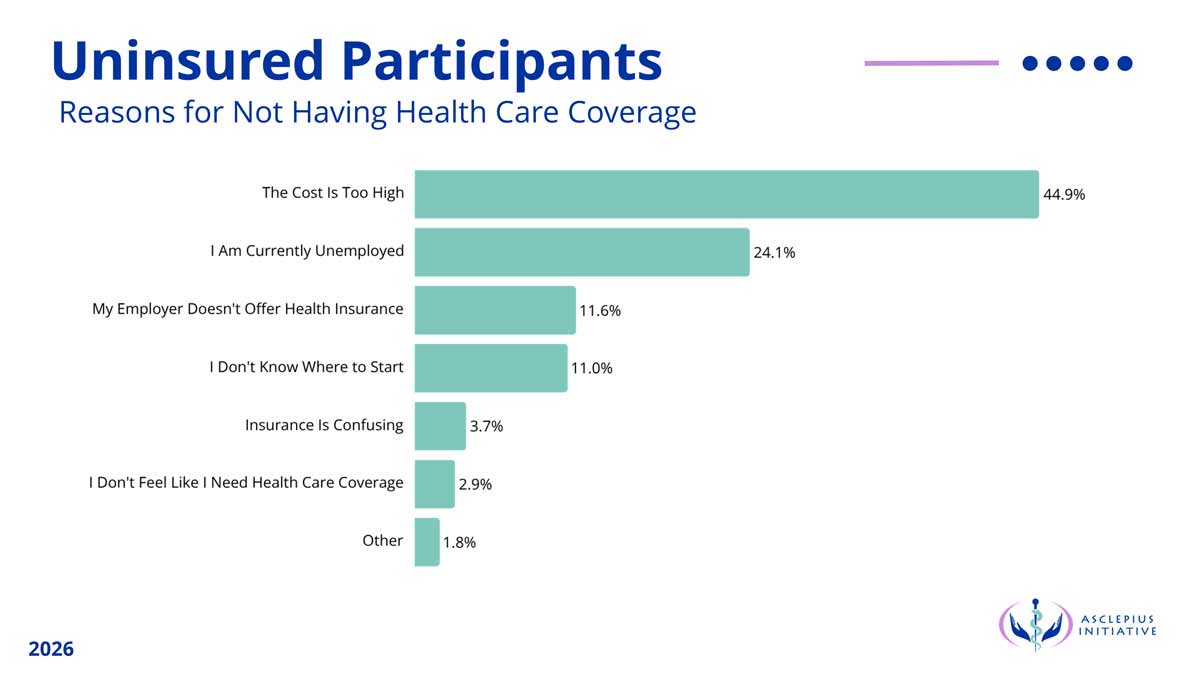
These responses reflect a variety of obstacles to having health insurance. Some cannot afford coverage, while others may have jobs that do not provide insurance; others may need more help understanding what options are available and how to get enrolled.
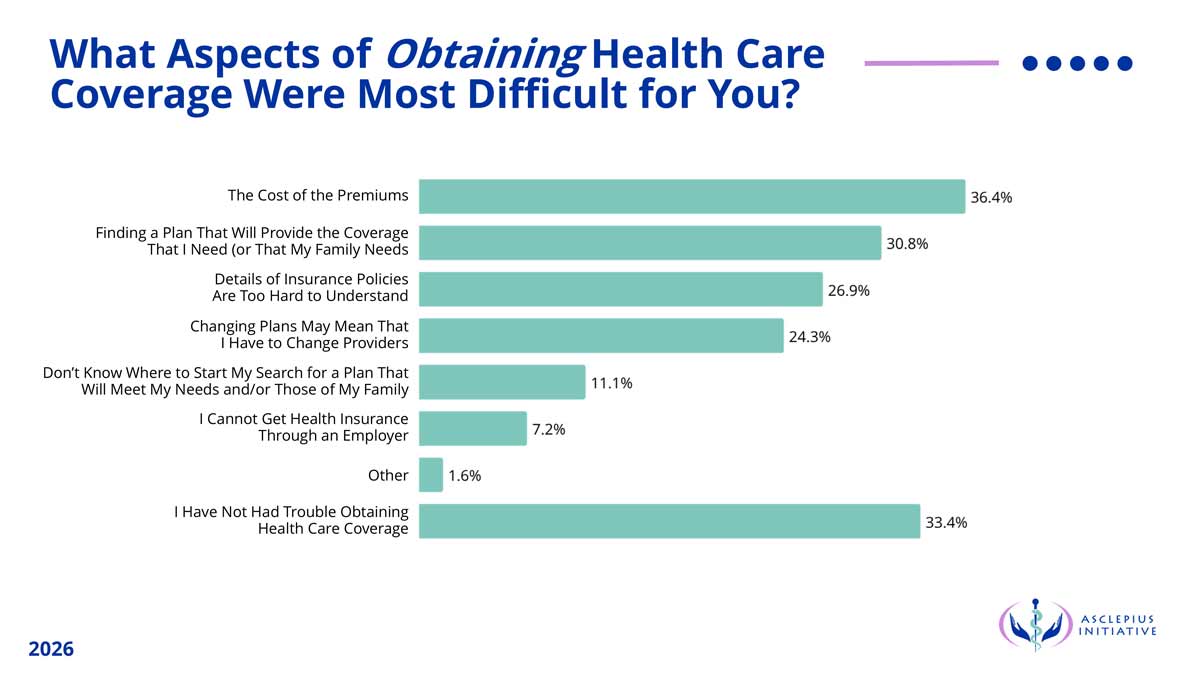
The survey then asked those with insurance about their difficulties obtaining coverage; participants could select up to three reasons. Overall, nearly two-thirds (61.1%) had at least one problem obtaining coverage. More than one-third (36.4%) identified premium costs as a challenge. Nearly one-third (30.8%) reported difficulty finding a plan that met their needs, and 26.9% said insurance policy details were too hard to understand.
Only one-third (33.4%) said they had no trouble obtaining coverage.
Choosing a Plan Involves More Than the Cost
Participants reported a variety of approaches when selecting health care coverage. 31.1% said they just stayed with the one they had before. The same share (31.0%) chose the plan with the best benefits they could afford.
22.4% made sure their current health care providers were included in the plan. More than one in five (21.1%) said they chose the only plan that was offered to them.
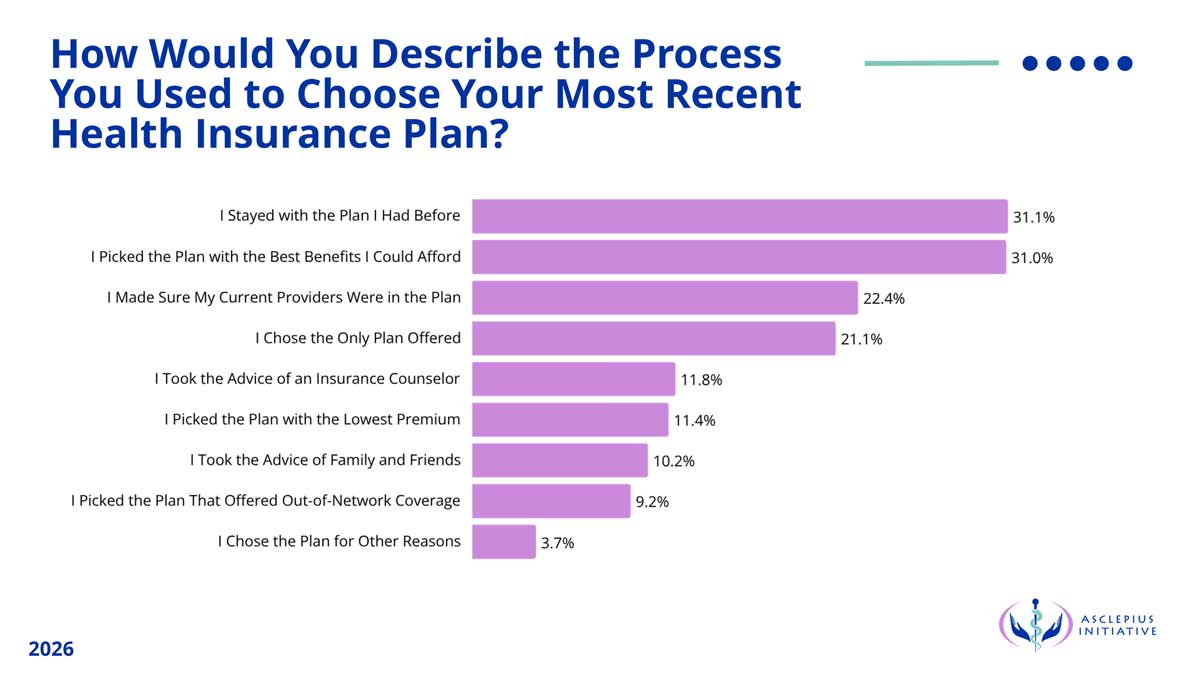
These responses help explain why people may end up with plans that don’t meet their needs, especially if they don’t carefully review the details before choosing or if they don’t have adequate, affordable options.
In fact, 24.3% of participants considered the possibility of having to change providers when changing plans to be challenging. Choosing a new health plan can affect more than a household’s budget; it can also affect relationships with doctors and other providers, which can then impact quality and continuity of care.
Understanding Benefits Can Be Just as Hard
Even after enrolling, people may struggle to make sense of their coverage.
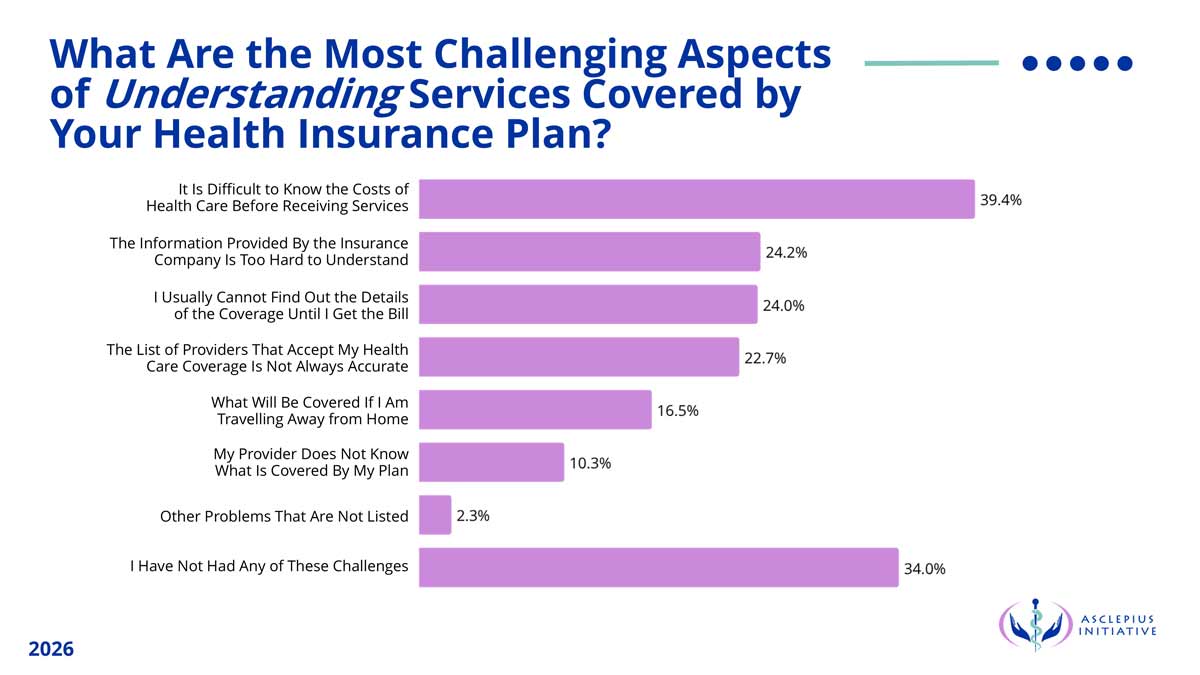
Nearly four in ten participants (39.4%) said it was difficult to know the cost of health care services before receiving them. 24.2% said insurance company information was too hard to understand, and 24.0% reported that they often could not learn the details of their coverage until they received a bill.
Some also noted that the list of providers that accepted their insurance was not always accurate (22.7%). These issues can make it harder to plan for treatment or understand what a visit will cost.
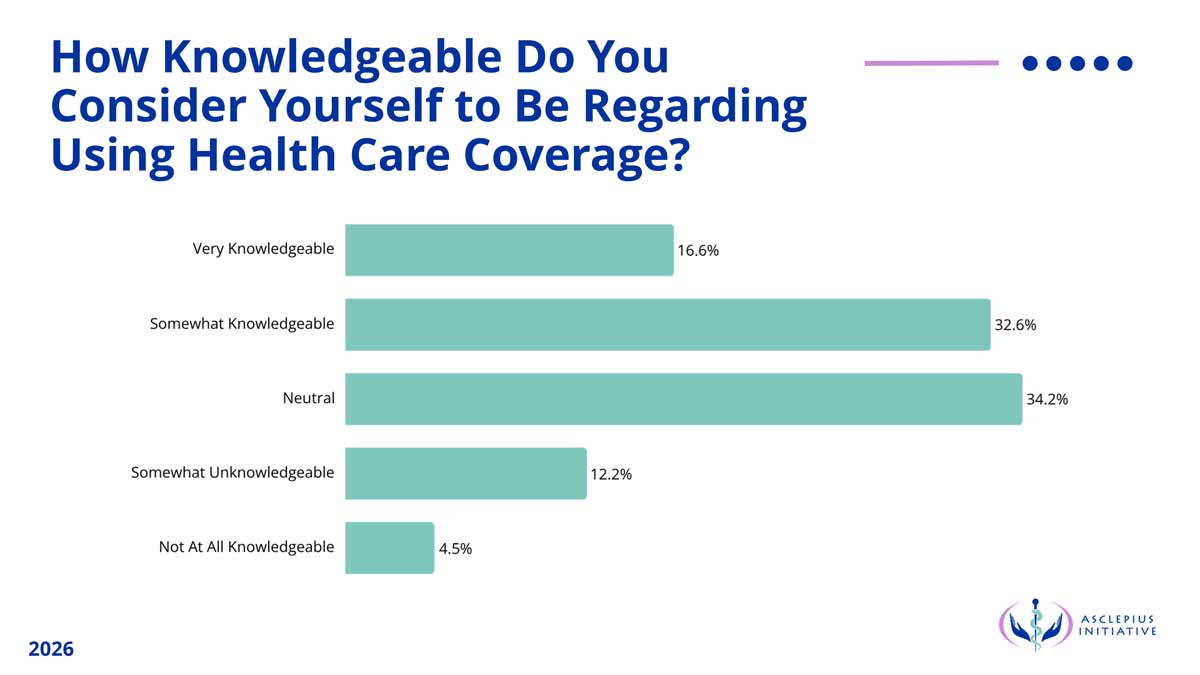
Participants had mixed views about how well they knew how to use their insurance. Only 16.6% considered themselves very knowledgeable, while 32.6% said they were somewhat knowledgeable. More than one-third (34.2%) selected a neutral response.
Having Coverage Does Not Always Lead to Care
Costs, difficulty finding doctors, and long waits for appointments are just some of the problems people can face when trying to get medical care.
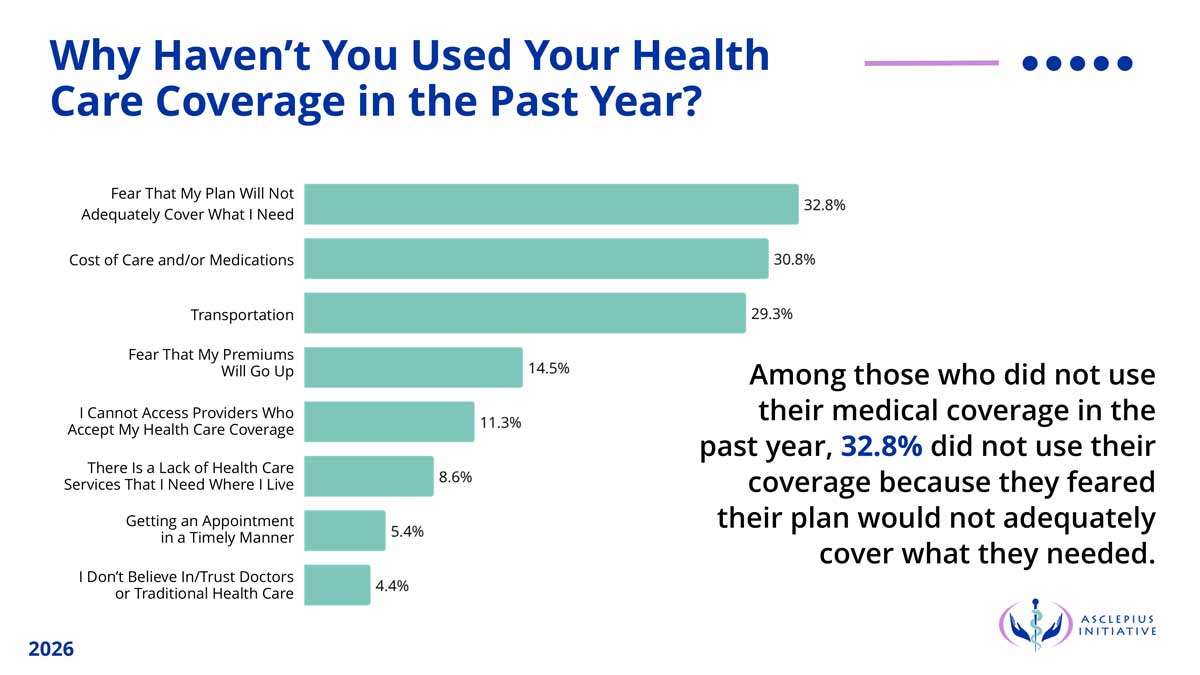
Nearly half (49%) of survey participants reported problems using their coverage. Among those who faced challenges, 48.2% cited the cost of care and/or medications, while about the same number (47.9%) worried that their plan would not cover what they need.
Other obstacles to care included a lack of health care services or providers that accepted their insurance, long waits for appointments, transportation problems, and concerns that using insurance would cause their premiums to increase.
Overall, 4.4% of participants reported not getting care because they did not believe in or trust doctors or traditional health care.
TAI’s 2026 survey findings illustrate that having health care coverage is only part of the path to getting care. Other factors, such as high out-of-pocket costs, provider shortages, and transportation challenges, can still stand in the way. Until the U.S. addresses these barriers and makes sure that everyone has coverage, it will continue to spend more on health care while remaining well behind other wealthy countries in the health of their populations.
The results of this, and TAI’s previous surveys, provide strong evidence of the critical need for TAI’s mission: to build support for a universally accessible, continuous, affordable, equitable, and high-quality health care coverage system- one that people can understand, afford, and count on when they need care.